ACR: The "Invisible Eye" Inside Your Living Room
You’ll jave heard of Shazam - the app that listens to a song and tells you the name of the artist.
Imagine if that technology was built into your TV, but instead of helping you find a song, it was secretly watching every single pixel on your screen to report back to advertisers. This is called Automatic Content Recognition (ACR), and in 2026, it is the primary way your TV spies on you.
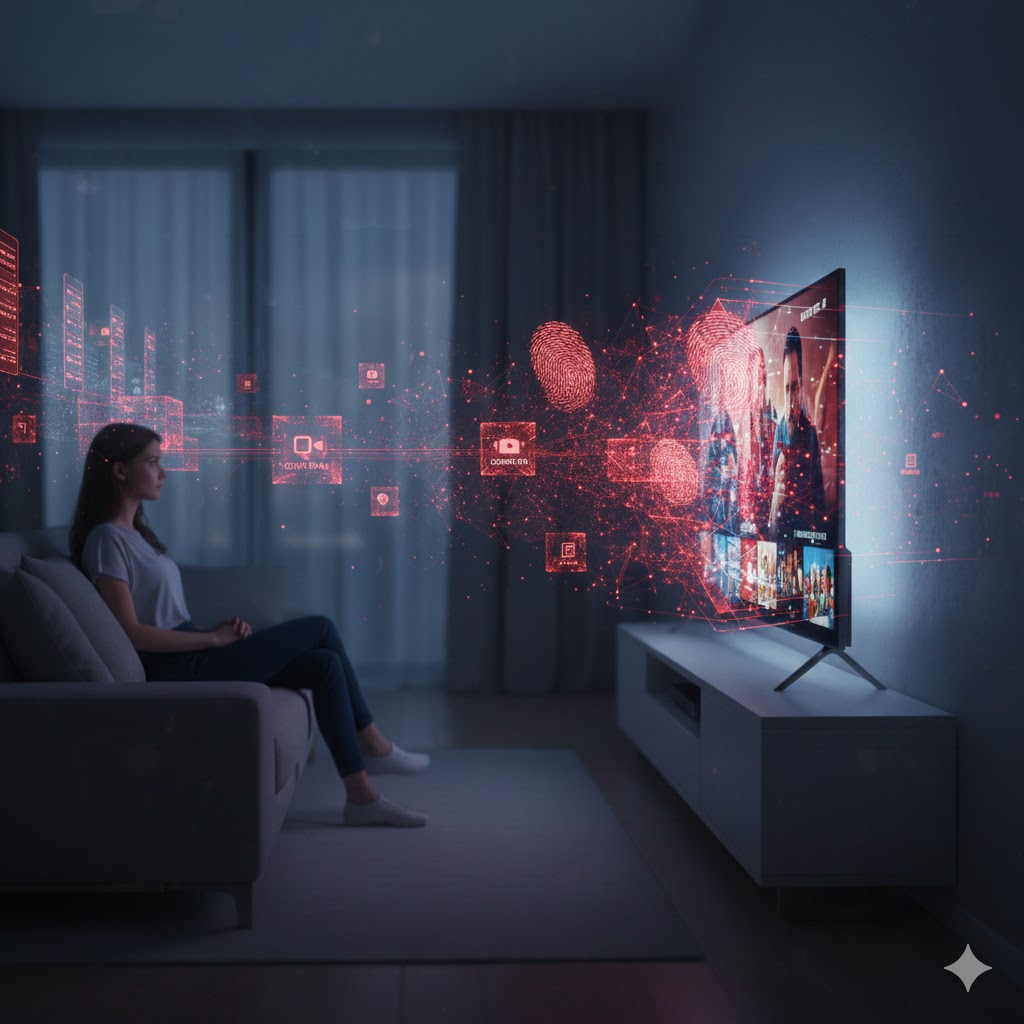
ACR isn't just about what apps you use; it’s a constant, silent observer that knows exactly what you are watching, even if you aren't using the "smart" features of your TV.
How It Works: The Digital Fingerprint
ACR doesn't record a video of your living room, but it does something nearly as invasive. It takes "fingerprints" of what is appearing on your glass:
- Micro-Screenshots: Your TV captures small snippets of the images or audio playing on the screen (sometimes up to 7,200 times per hour).
- The Hash: It turns these snippets into a unique digital code (a "fingerprint").
- The Comparison: It sends this code to massive server farms in the clouds. If the code matches a movie, a news segment, or a commercial in their library, the system logs exactly what you are watching.
It Watches Everything (Even screen casts)
ACR takes a screenshot of what you're watching, every 500ms. It captures audio too, it knows when you mute an advert and when you change channels.
One of the biggest misconceptions is that ACR only tracks apps like Netflix or YouTube. It does not. Because ACR looks at the "glass level" (the actual pixels being displayed), it can track:
- Live TV.
- Screen casts from your phone or tablet.
- DVDs you are playing.
- Games - It knows if you’re playing Call of Duty or FIFA.
- HDMI Input. If you plug your work laptop into your TV to show a presentation, ACR can "fingerprint" those images too.
Who Is Watching?
Most major TV brands use ACR, though they often give it "friendly" names in the settings menu to avoid scaring you. When your TV "calls home" to report your viewing, it sends data to specific web domains. If you use a network monitor, you might see these addresses appearing:
- Samsung
- Often called "Viewing Information Services"
- Calls domains like
samsungcloudsolution.comandsamsungacr.com
- LG
- Often called "Live Plus"
- Calls domains like
alphonso.tvandad-solutions.video
- Sony
- Often called "Samba TV"
- Calls domains like
samba.tvandtvinteractive.tv

Why Does This Matter?
This data is the "holy grail" for advertisers. By knowing you watch the 6 PM news every day and play racing games on the weekend, they can build a profile that follows you to your phone and laptop. They use ACR to see if you muted a commercial (which tells them you didn't like it) or if you watched an ad all the way through.
It's a BIG problem!
In 2026, lawsuits are mounting—most notably in Texas claiming that this "mass surveillance" is being done without clear consent, turning your expensive home entertainment system into a data-harvesting machine for third-party brokers.
The lawsuits allege that these TVs are taking "digital fingerprints" (basically screenshots) of your screen every 500 milliseconds. That is twice every second. This happens regardless of whether you are watching Netflix, playing a video game, or even looking at private family photos plugged in via a USB drive.
As of early 2026, the courts have already granted Temporary Restraining Orders (TROs) against several of these companies. In January 2026, a judge ordered companies like Samsung and Hisense to temporarily stop collecting ACR data from Texas residents while the full trial proceeds.
The state of Texas is seeking civil penalties of up to $10,000 per violation. Given that there are millions of Smart TVs in Texas alone, this could result in the largest privacy settlement in history, potentially forcing manufacturers to change how TVs work globally.