Free Wi-Fi: Your Free Ticket to a Data Disaster
Sitting enjoying a beer, unwinding with a pint at the local pub. You see the "Free Wi-Fi" sign, and without a second thought, you connect. Convenient, right? Perhaps. Safe? Absolutely not!
That "free" connection could be costing you far more than you realise, potentially exposing your most private data to cybercriminals. Stop blindly connecting and understand the very real dangers of public Wi-Fi.
The Invisible Danger: What Lurks on Public Wi-Fi?
When you connect to a public Wi-Fi network, you're not just sharing the internet connection with other people; you're often sharing the network itself. This means your device is suddenly visible to everyone else connected to that same network. And not everyone has good intentions.
Think of it like being in a room where everyone can easily peer into your belongings, listen to your conversations, and even steal your wallet. On public Wi-Fi, this can happen digitally, silently, and without any visible signs.
How Your Data Gets Stolen Without You Knowing
Cybercriminals love free public Wi-Fi for several chilling reasons:
- Unsecured Connections: Many public Wi-Fi networks lack proper encryption, meaning the information you send and receive is like an open book. Passwords, bank details, emails – all visible.
- Man-in-the-Middle Attacks: A hacker can position themselves between you and the website you're visiting, intercepting all your data. They can even trick you into connecting to their fake Wi-Fi network.
- Malware Distribution: Some attackers exploit vulnerabilities to inject malware onto your device as soon as you connect, turning your phone or laptop into their personal spy.
- Session Hijacking: Criminals can steal your "session cookie" for a website, allowing them to log in as you without needing your password. Imagine them accessing your online banking!
Every email you send, every social media post you check, every online purchase you make - without protection, it's all potentially exposed.
The Big Apple Mistake: Overselling Their Security
You hear it all the time - but I have an iPhone, I'll be OK, Apple have a Private Relay to protect me online.
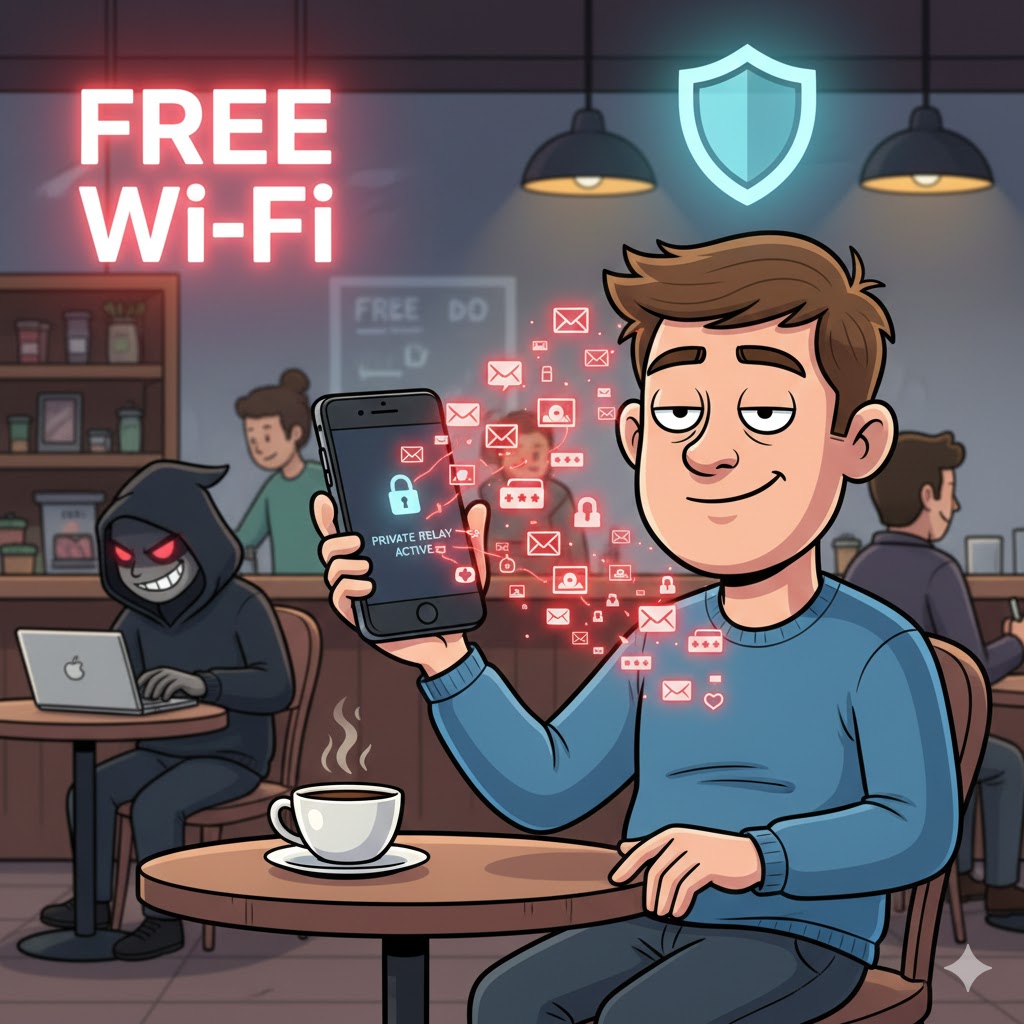
Apple does offer a built-in feature called iCloud Private Relay, but calling it a "full replacement" for a VPN on public Wi-Fi is a dangerous misunderstanding.
It’s like wearing a bulletproof vest that only covers your heart, it’s great for that specific spot, but the rest of you is still wide open.
Apple's Private Relay is essentially a "Safari-only VPN". Here is the breakdown of why it’s not enough for a pub or restaurant network:
- The Safari Limitation: Private Relay only encrypts traffic inside Safari. If you open the Facebook app, Instagram, your banking app, or even Google Chrome on your Mac, that data is not protected by Private Relay. It travels over the public Wi-Fi in plain sight.
- The "Leaky" Background: Your phone is constantly doing things in the background - checking for mail, updating weather, or syncing apps. These background "pings" are often unencrypted and can reveal your identity or location to a hacker sitting in the same cafe.
- No System-Wide Shield: A true VPN creates an encrypted tunnel for 100% of the data leaving your device. Private Relay only cares about your web surfing in one specific app.
If you are at home, Private Relay is a nice privacy bonus. If you are in a public place, turn on a real VPN.
Your Digital Shield: The Power of a VPN
This is where a Virtual Private Network, or VPN, becomes your essential digital bodyguard. A VPN creates a secure, encrypted tunnel between your device and the internet, even when you're on an unsecured public Wi-Fi network.
Imagine sending your sensitive information through a heavily armored, secret tunnel that no one else can see or access. That's what a VPN does for your data.
I use various VPN's and I have one configured on my Homelab to allow the family to connect home, to access servers and browse the internet via the ad-blocker and my local DNS.
How a VPN Protects You: The Tech Made Simple
When you use a VPN:
- Encryption is Key: Before your data even leaves your device, the VPN encrypts it – scrambling it into an unreadable code. Even if a hacker intercepts it, they can't make sense of it, the cannot decrypt or read it.
- Masked Identity: Your true IP address (your device's unique identifier) is hidden. Instead, websites and services see the VPN server's IP address, making it much harder to track you.
- Secure Tunnel: All your internet traffic passes through this secure, private tunnel to the VPN server, and then out to the internet. This bypasses the vulnerabilities of the public Wi-Fi network itself.
In essence, a VPN acts like a strong, opaque barrier between your precious data and the prying eyes of cybercriminals on public Wi-Fi. It’s an indispensable tool for anyone who values their privacy and security in today's connected world.
Don't Be a Victim: Take Action Now
The convenience of free Wi-Fi is a trap if you don't take precautions.
Make it a non-negotiable rule: NEVER connect to public Wi-Fi without a VPN. Investing in a reputable VPN service is a small price to pay for the peace of mind and robust protection.